Analysis > Methodology
Material and Technique
Lillian was known for largely working in a single direction at each phase of her work. It appears her thinking is linear, continuously developed as work progressed. However, a closer look reveals shifting methods and subtly changing approaches.
Here, the goal is to identify some of the underlying relationships within each grouping and over the full body of work, outlining differences that might otherwise not be apparent.
Material
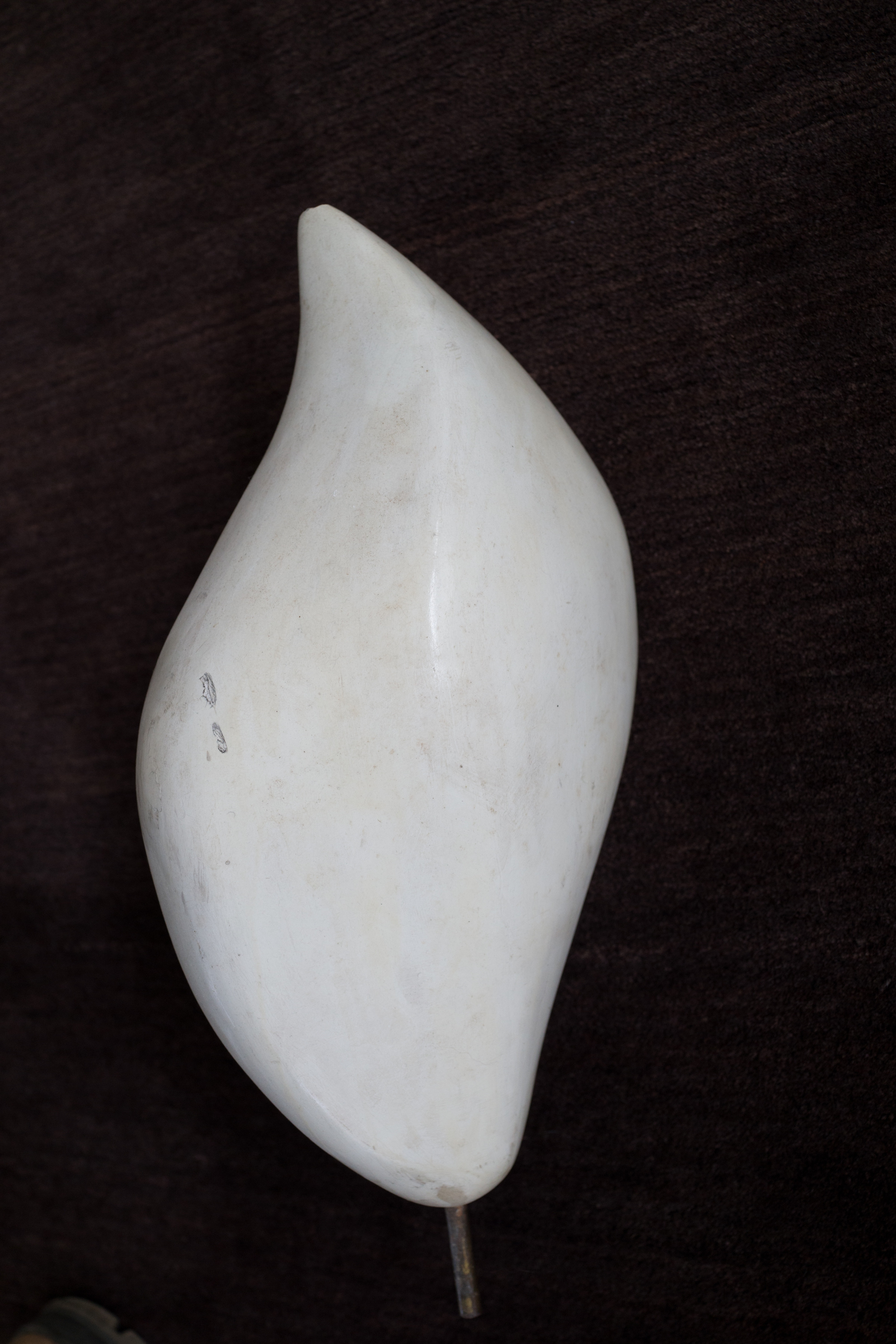
Florsheim's early investigations can be understood as efforts to challenge and learn about what materials can do. In each early work with a new material, the agenda was simple, as can be seen in her early plaster pieces in the group, Shapes (group D). As understanding grew, Florsheim was able to push the work forward, with her later plaster works featuring complex and distorted shapes difficult to explain or execute.
Plaster
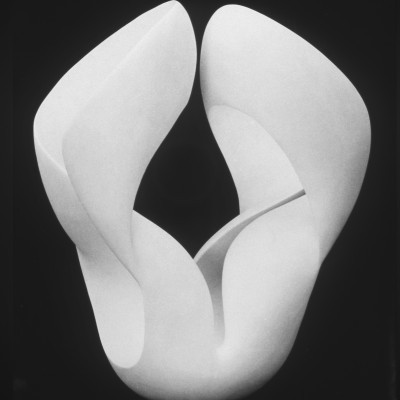
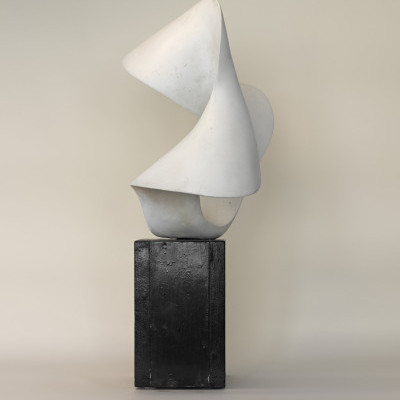
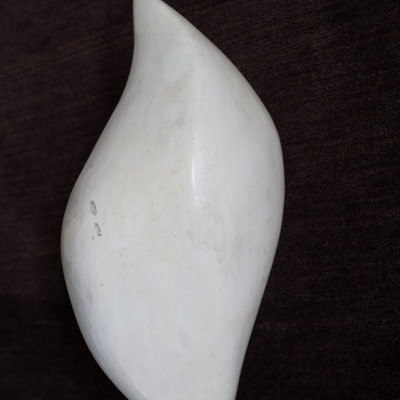
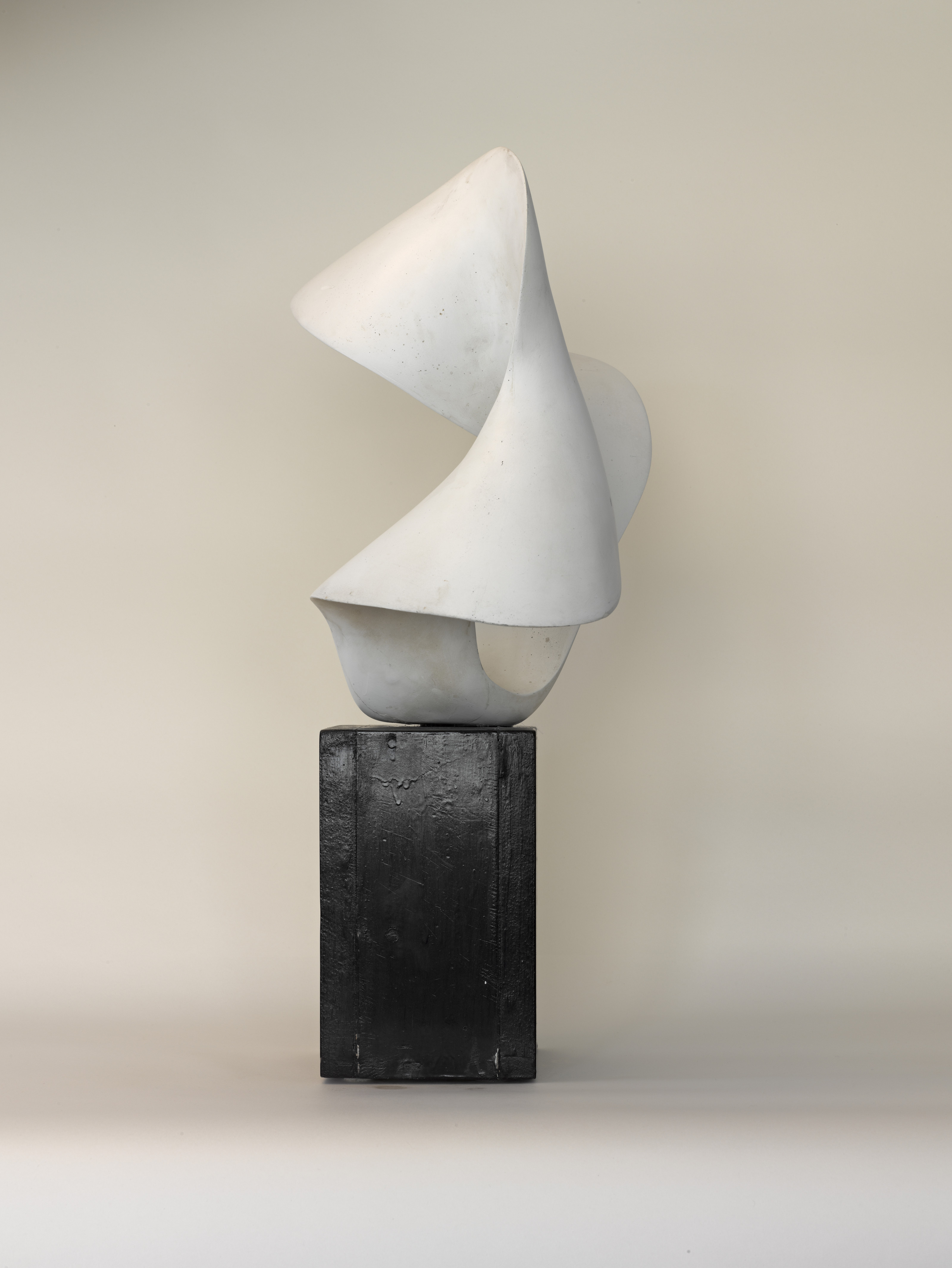
The works in plaster were among her earliest. Her technique was to make an armature in wire, and cover it with either plaster or wax (to be cast).
She made a few early plaster works of figural sculptures; then began to work with plaster more abstractly, making complex curved constructions. Her early abstractions were of solid shapes, simpler constructions. She moved toward more complex forms, such as Construction (D8),with very complex curvature.
Metal casting
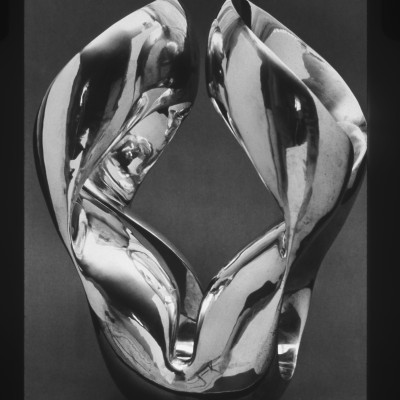
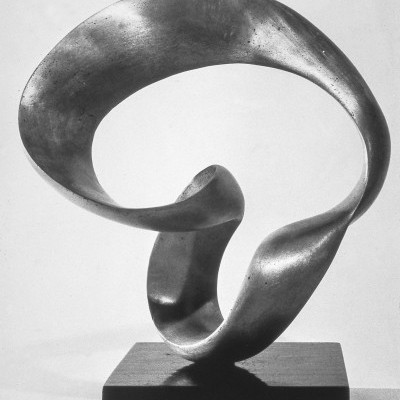
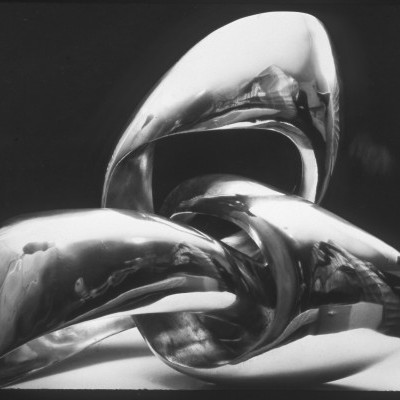
Many early works were cast in bronze or other metals. The figural works usually had a rougher finish, replicating the texture of the clay original, while more abstract works were refined with smooth surfaces, often cast in either aluminum or bronze.
String
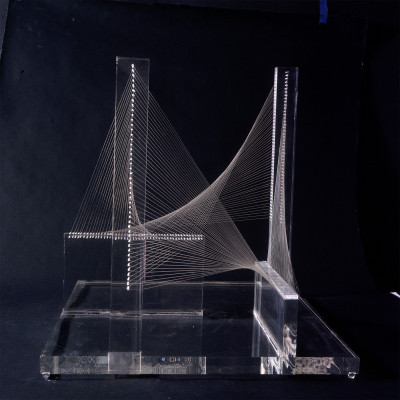
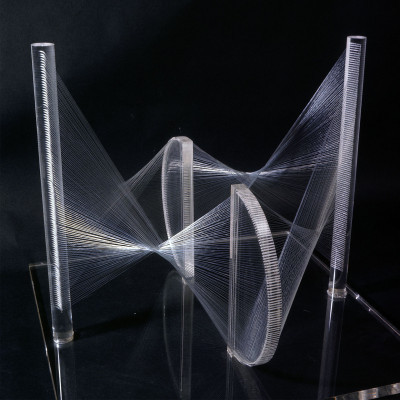
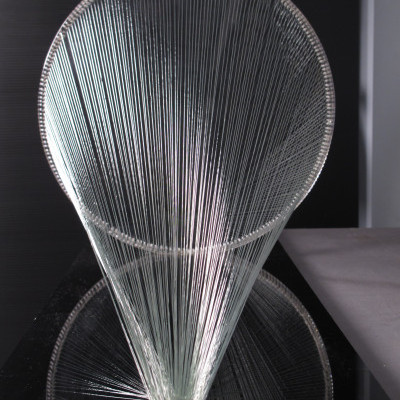
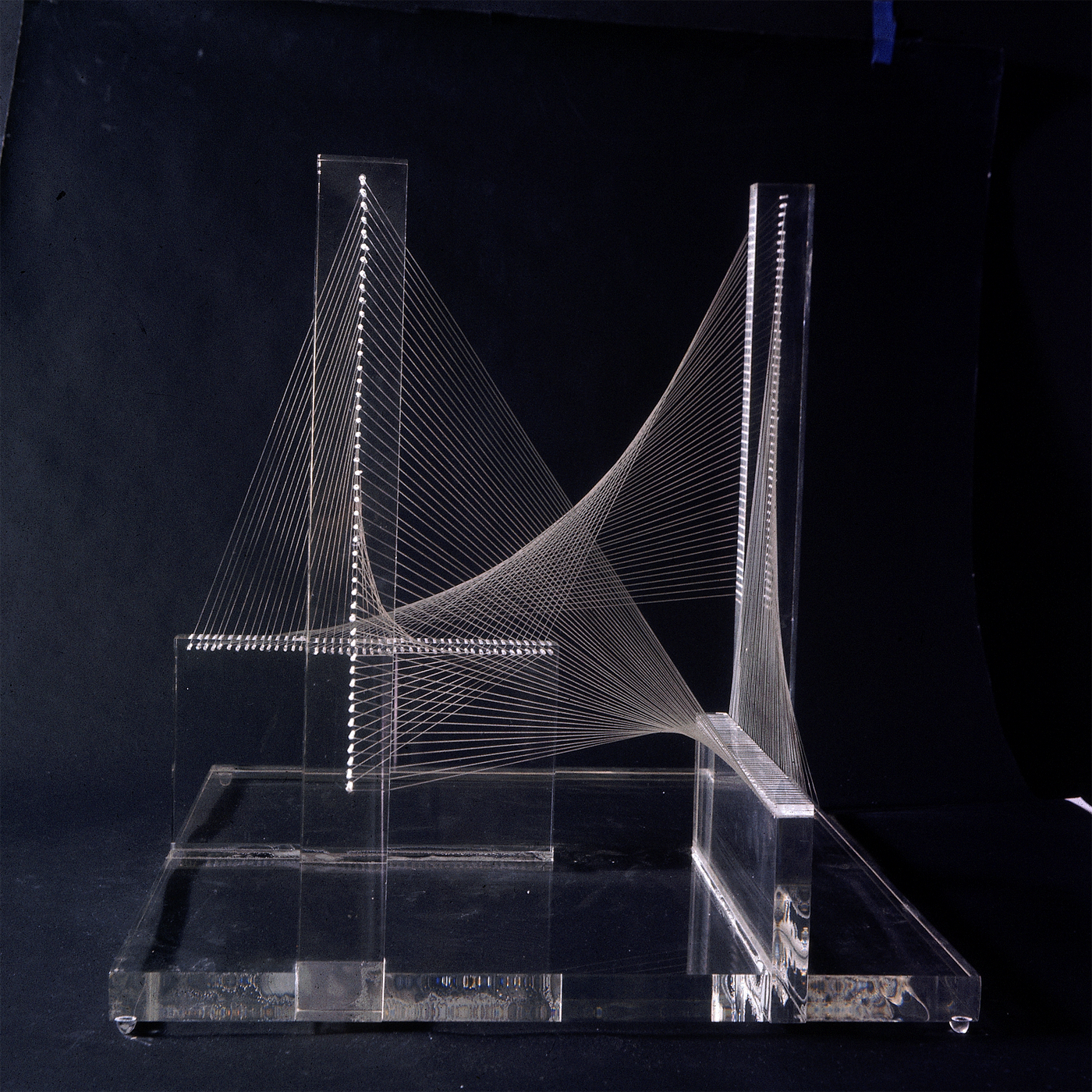
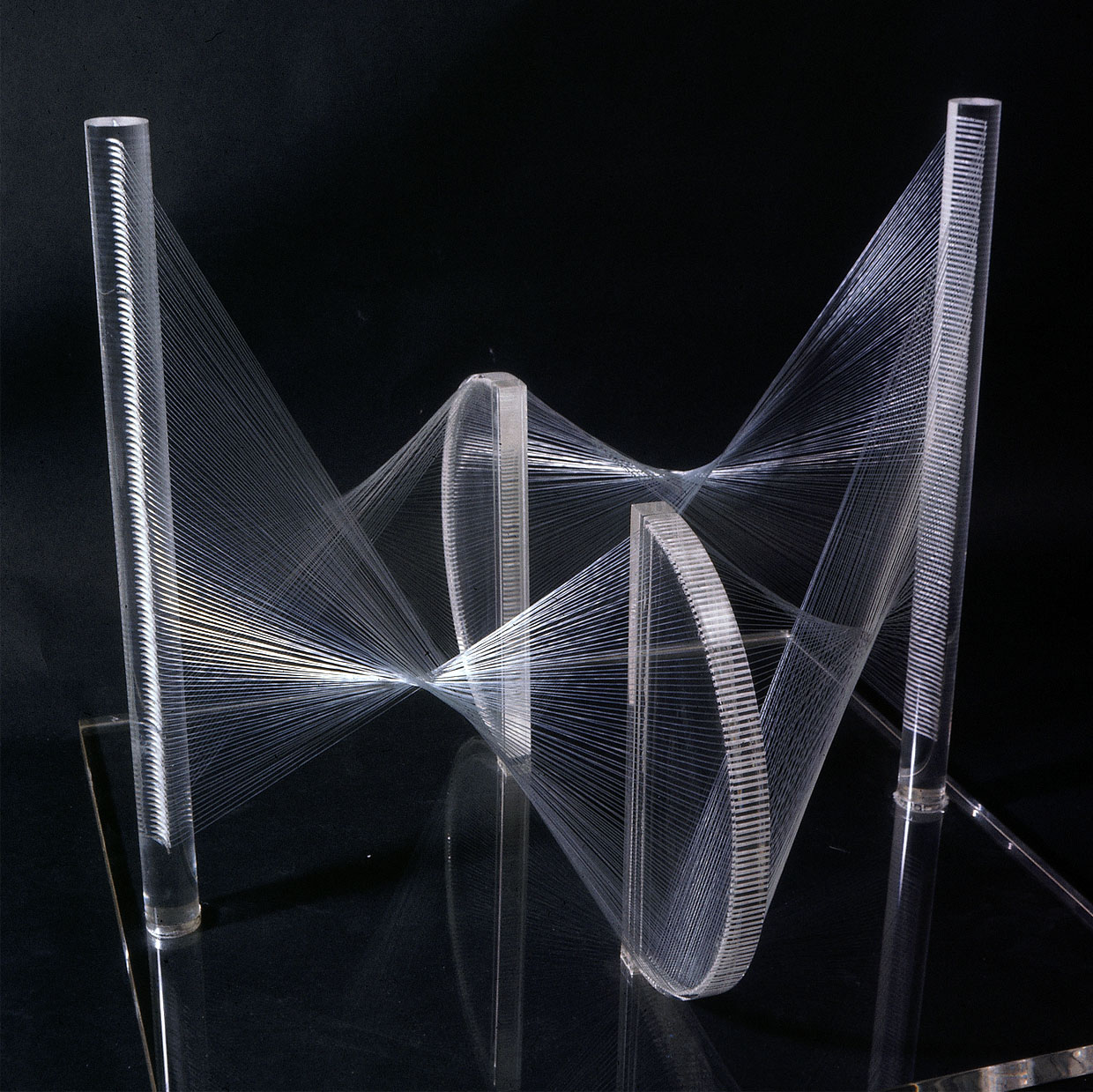
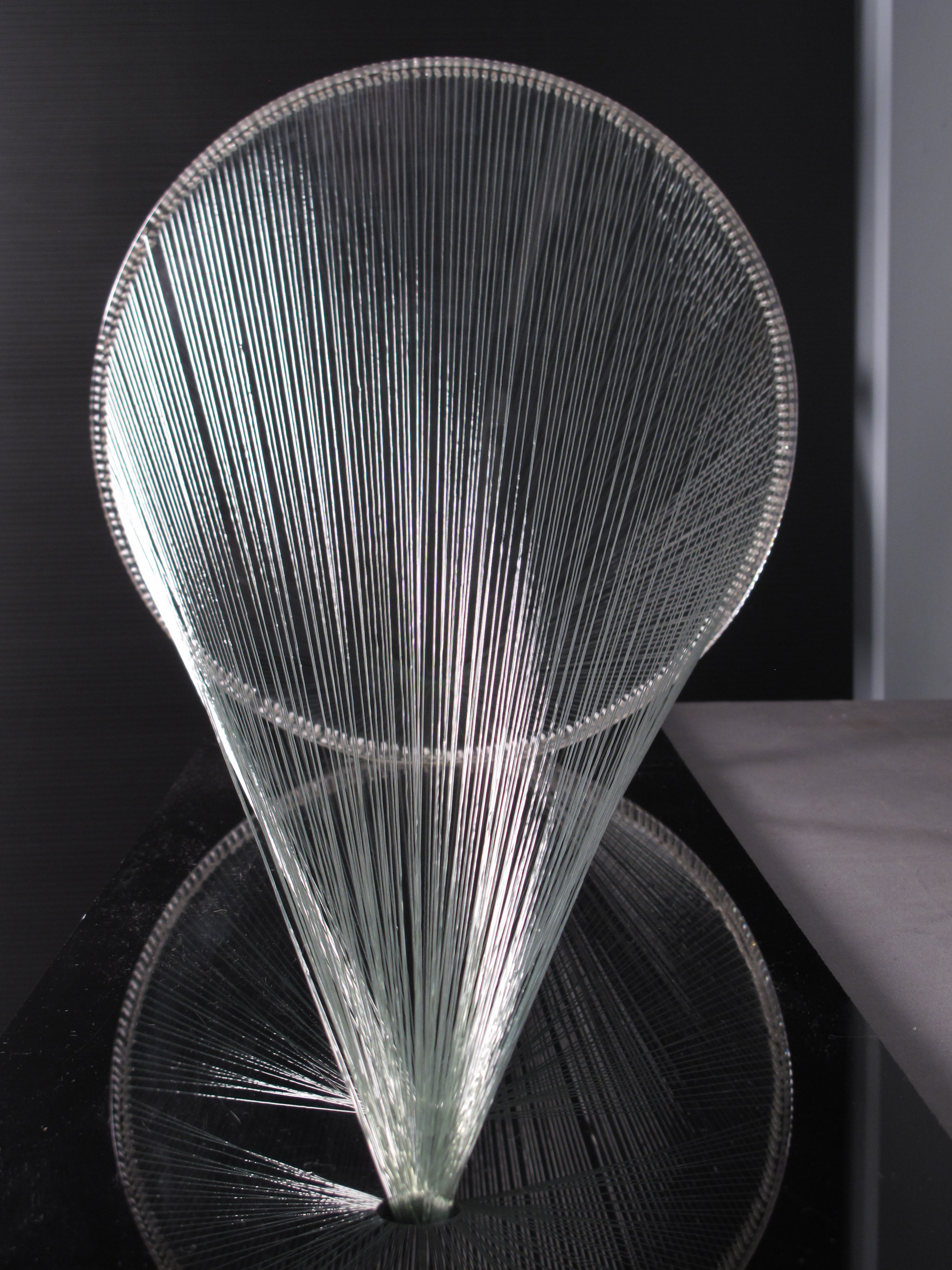
String models explore curved form and shape through surfaces, as the continuous piece of line is seen in lengths as segments creating a surface. The technique allowed for a double reading: the viewer can visualize the surface, or see through the construction.
This technique was learned from studies at the Institute of Design, where she studied under Hugo Weber. The approach had roots in Moholy-Nagy’s teaching from the 1940s. Early works had string wrapped on a wire armature (likely brass); in the later works, string was strung through Plexiglas planes with drilled holes, requiring more preconception than the earlier “wrapping an armature”.
Plexiglas
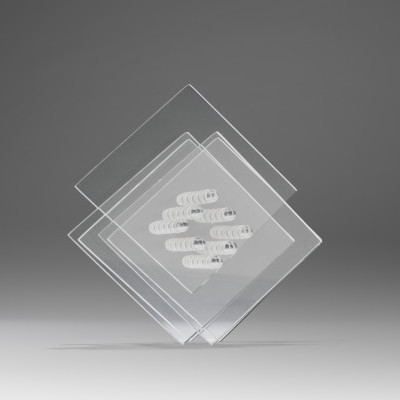
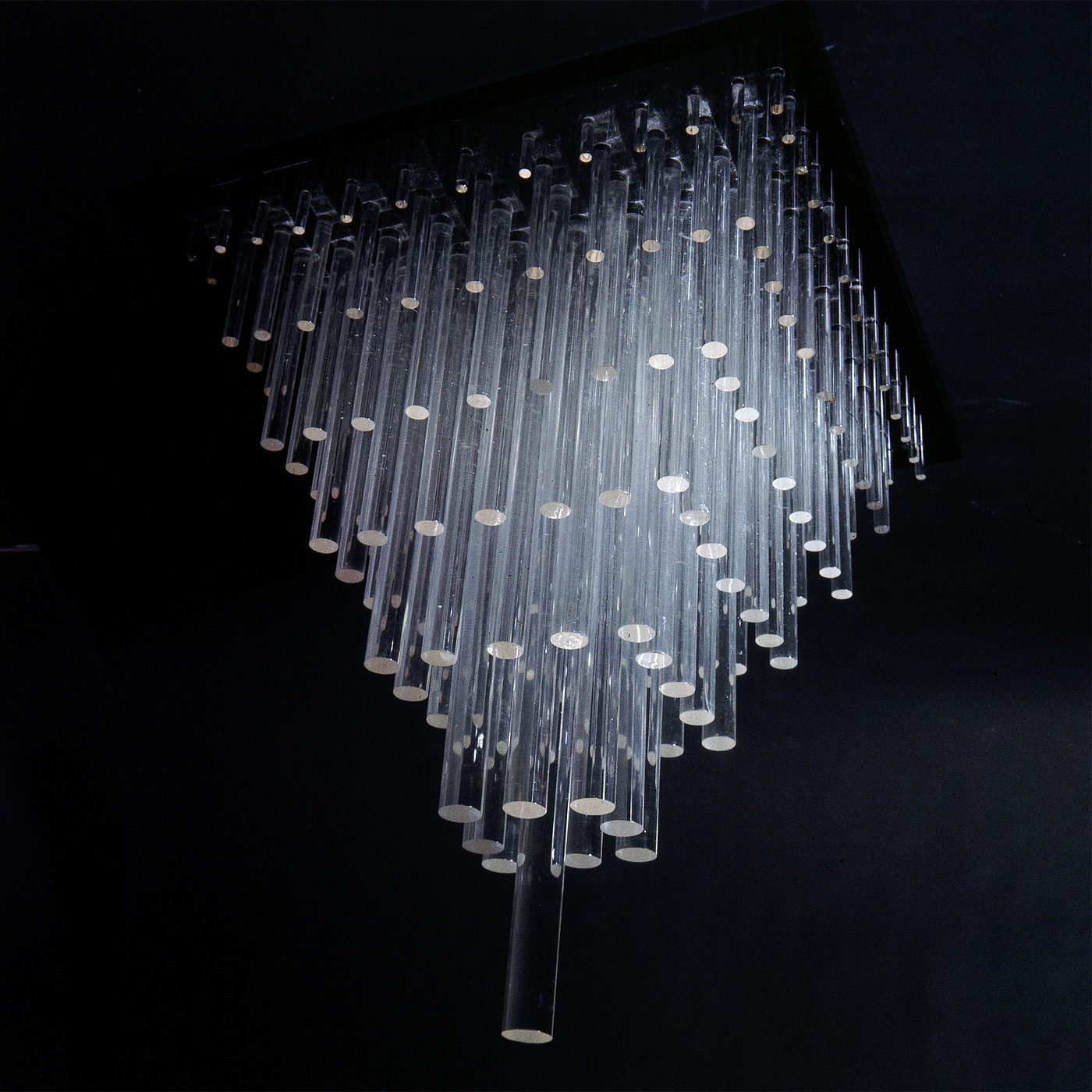
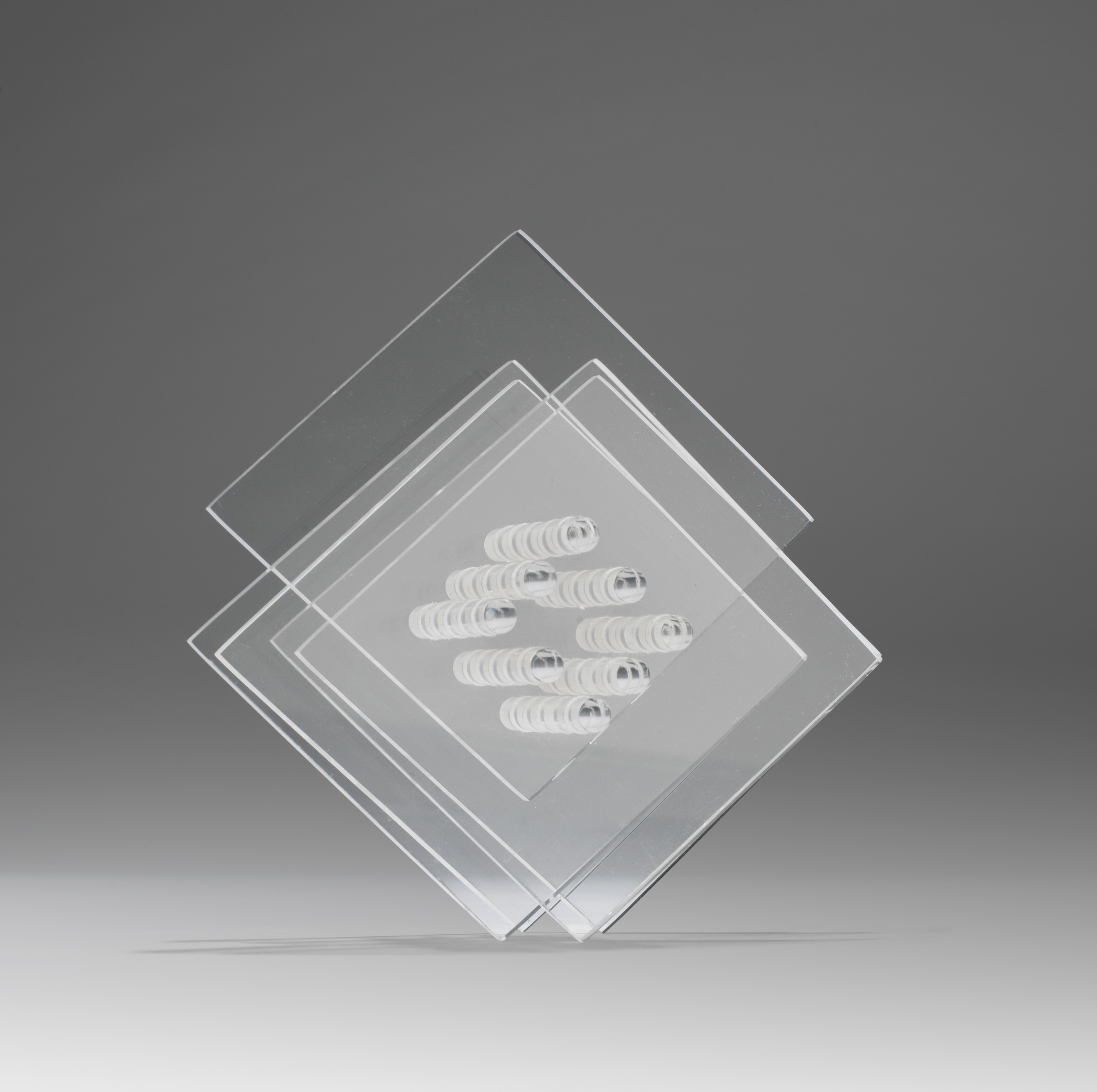
Used in a variety of ways, Plexiglas was the material of choice for much of Lillian’s work. In early works, two-dimensional parts are assembled to create a new form. For the later works, the contrast was heightened between rods and planes, typically between clear and solid Plexiglas.
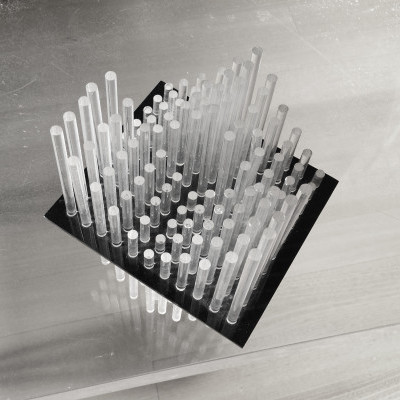
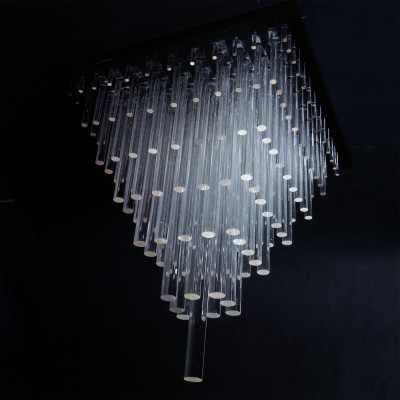
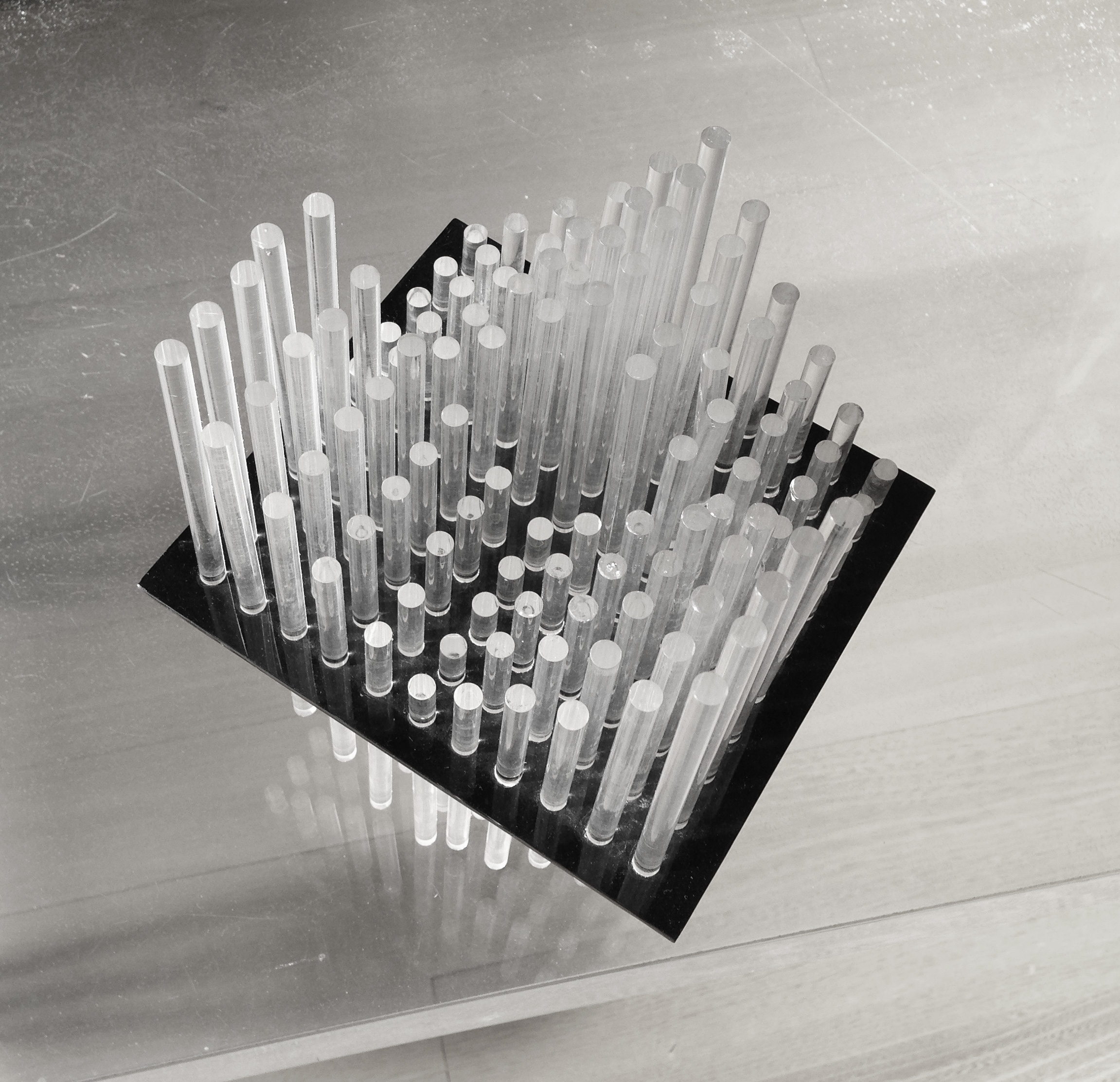
Much of Florsheim's work was in Plexiglas, with rods held in a plane of drilled holes. Often the form was modified by revising the pattern, size and length of rods, making works of different shape but with similar character.
Manufactured Metal
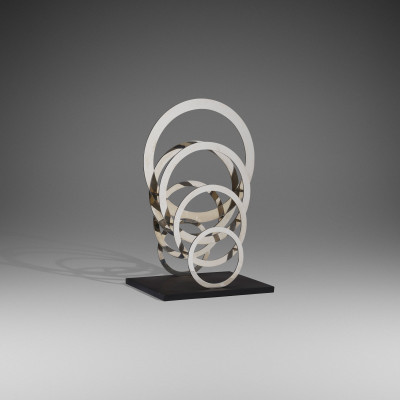
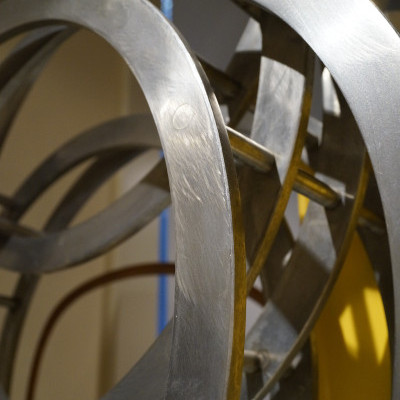
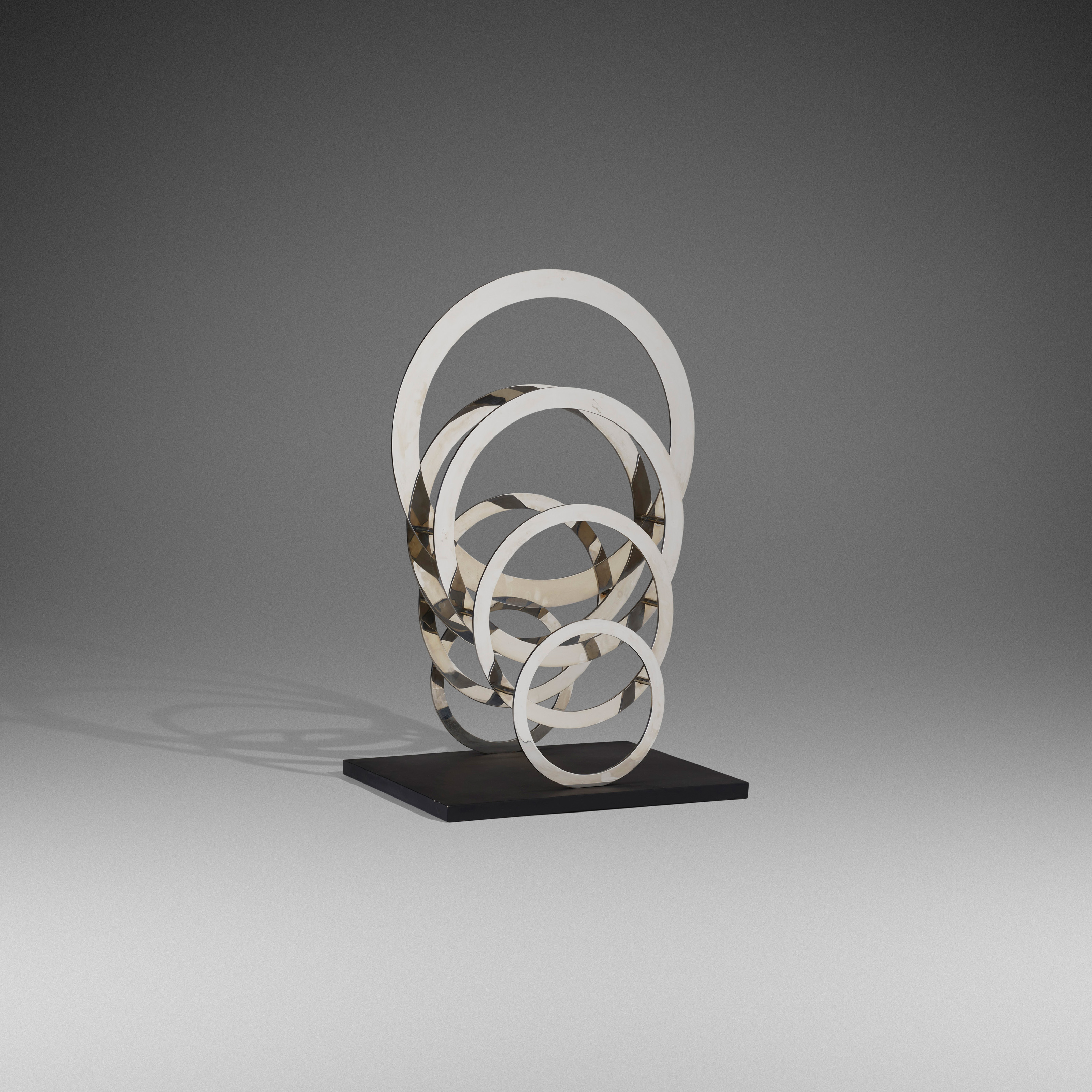
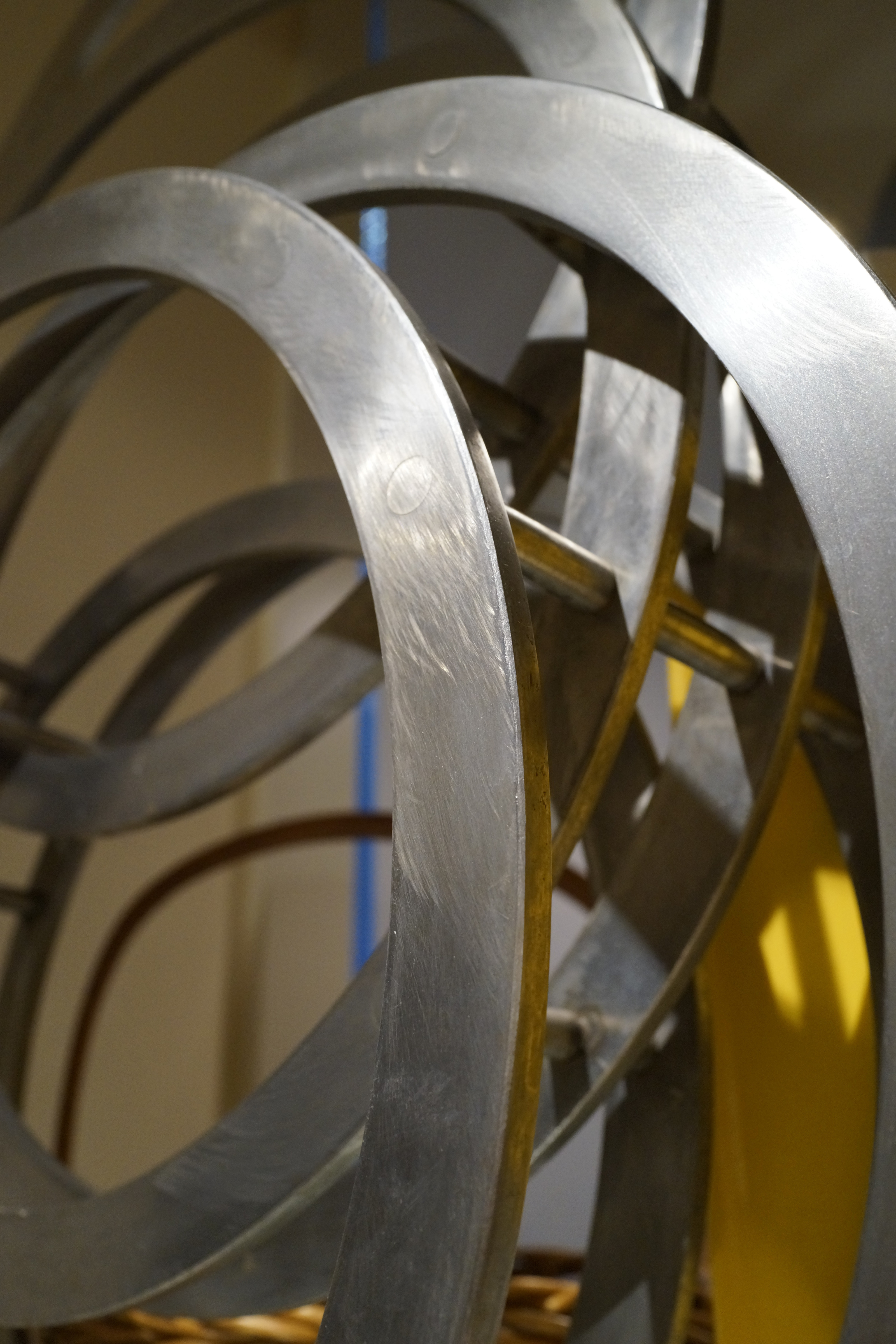
In some later works, pieces were designed and sent off to be fabricated in metal. The work was assemblies of metal pieces, largely based on precisely manufactured elements.



Effects
Many of the works were made in white, black, or clear with a high degree of contrast between the rods and the base plane, with contrast enhancing the emphasis on geometry.
Lillian’s work evidenced a high level of precision, with all parts specifically placed. Similar techniques gives an overall sense that the many works were similar, yet upon close inspection, there is surprising variation among even similar works. For example, in the group Rods through Plane (group H), clear rods pass through a thick black central plane although among different works there is variation in the number of rows and columns. The resulting shape did not change much, as the changes impacted only the resolution of the piece, as if the works were being tuned for effect.
Size and scale
Some pieces were made in different sizes, with the revised scale affecting perception: the Miniatures (group S) can be held close to the eye and gives a different impression than the larger versions.
Addition and subtraction
The formal techniques of addition and subtraction were used. An early work, Porcupine (E1), was made of planes of plastic glued together for a three-dimensional object. Its made from similar triangles of Plexiglas, slightly rotated, the result being a figural object, a sum quite different from its parts.
Subtraction can be found in Squares of Rods (2) (H12), where the presumed center is now an opening, without rods or the central plane. The reading of rods-in-the-plane is subverted by this secondary reading, that of openings and looking through.
Something and something else
Early utilitarian objects contained items, such as candy or cigarettes. The material works to celebrate the “task,” for both function and art. In these early works, the form reaches beyond the functional. A cigarette lighter is about light refracting through a Plexiglas cylinder while easy for the hand to hold. In the Perfume Stand, layered planes serve both as a geometric construction but also as shelves for the perfume bottles.
In later works (see Constructions), small parts were enclosed in a larger whole. In one, small Plexiglas balls rest in a double cylinder and are movable (O 9). In other instances, shapes had movement within a larger armature. Thus there is both outer form and interior meaning gained from the moving parts.